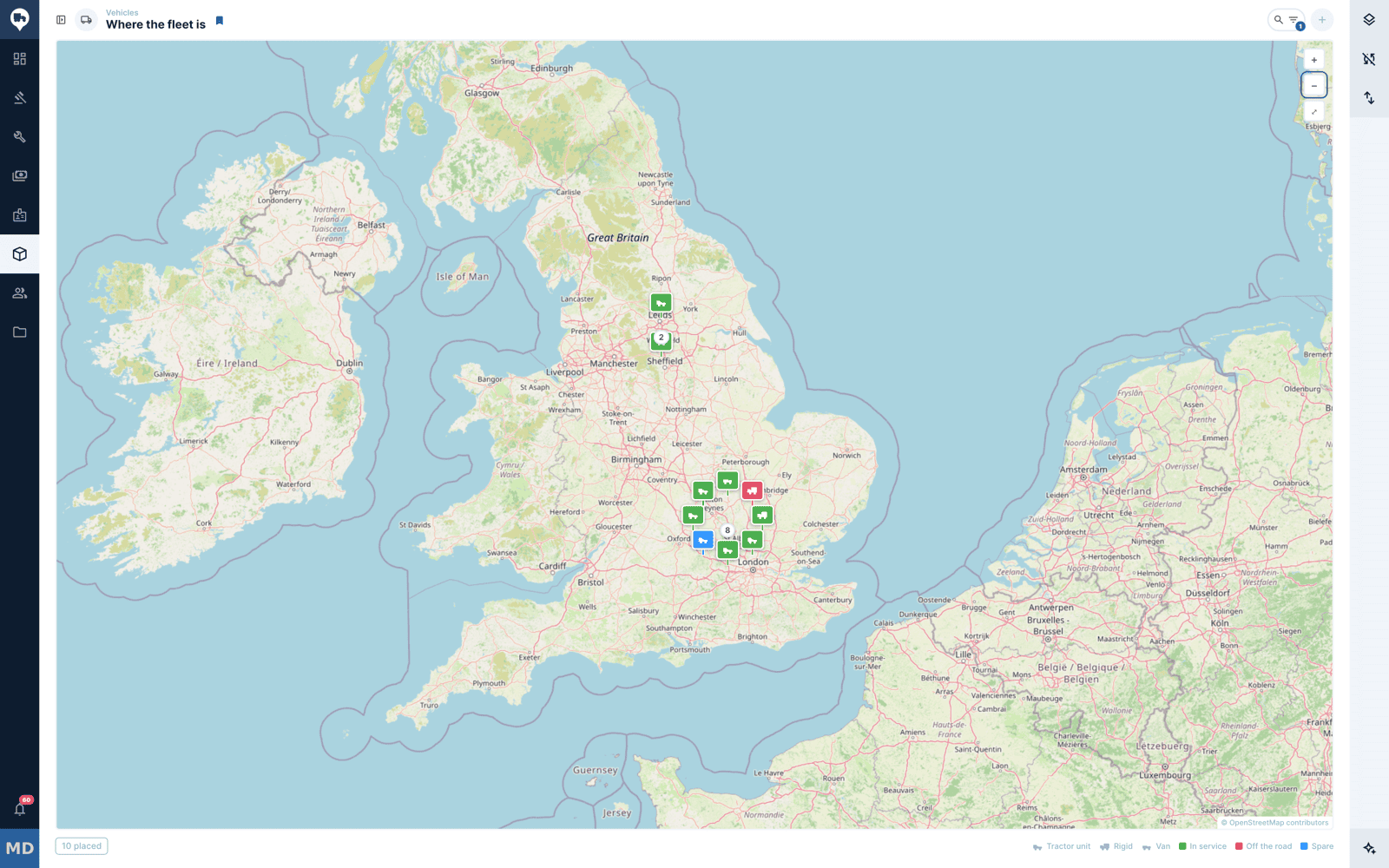
- No telematics. No live tracking, no CANbus, no driver-behaviour scoring. Vehicle positions are derived from the runs and the operating centres, and the field says "Derived, not tracked" on the record itself. Point a telematics feed at that one field and the same map becomes live with nothing else changing — tell us what you run and we will quote the integration separately.
- No route optimisation or scheduling engine. It tells you whether an allocation is lawful; it does not decide the allocation.
- Not an accounts package. Job costing gives cost, revenue and margin per run. There is no ledger, no VAT return, no invoice.
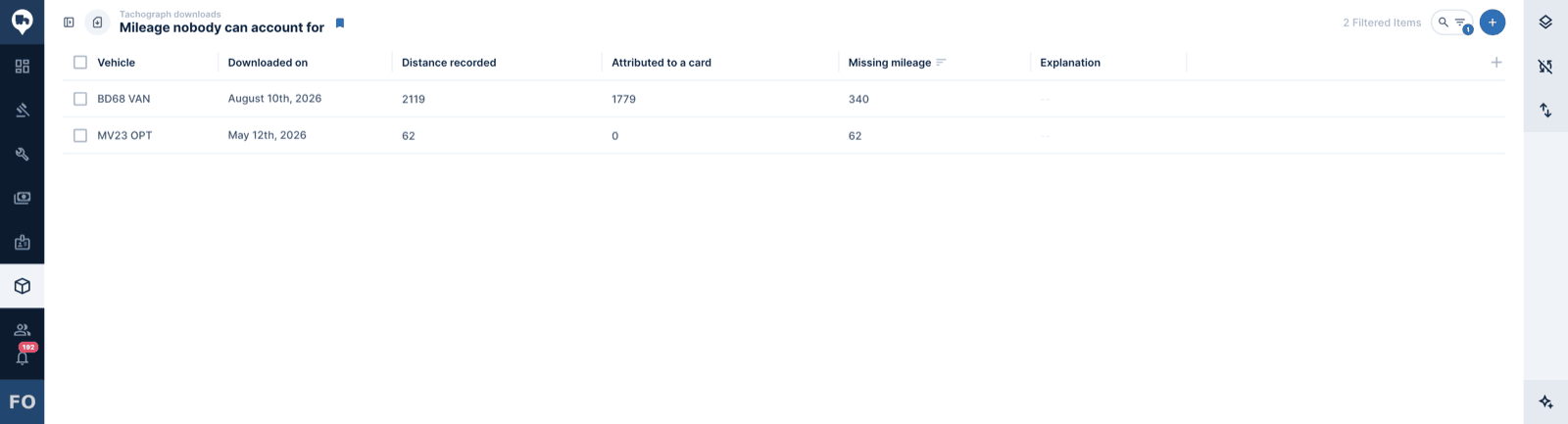
- No tachograph file parsing. Downloads are recorded as a register with dates and gaps; a .ddd file is not read.
- No native mobile app. The driver's screen is responsive web against the same scoped API.
- Single tenant, by design. One operator, one instance, their data never mixed with anybody else's.
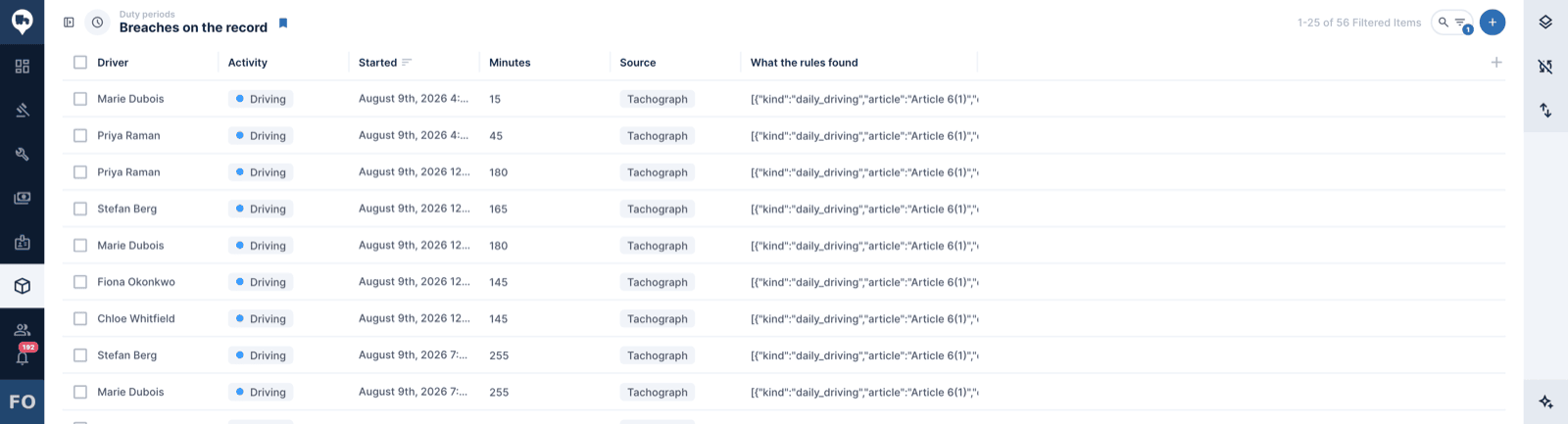
- Not legal advice. It encodes our careful reading of EC 561/2006, Directive 2002/15/EC and the rest, asserted by 137 automated checks — and your transport manager remains responsible. The code is deliberately legible enough for them to review that reading.
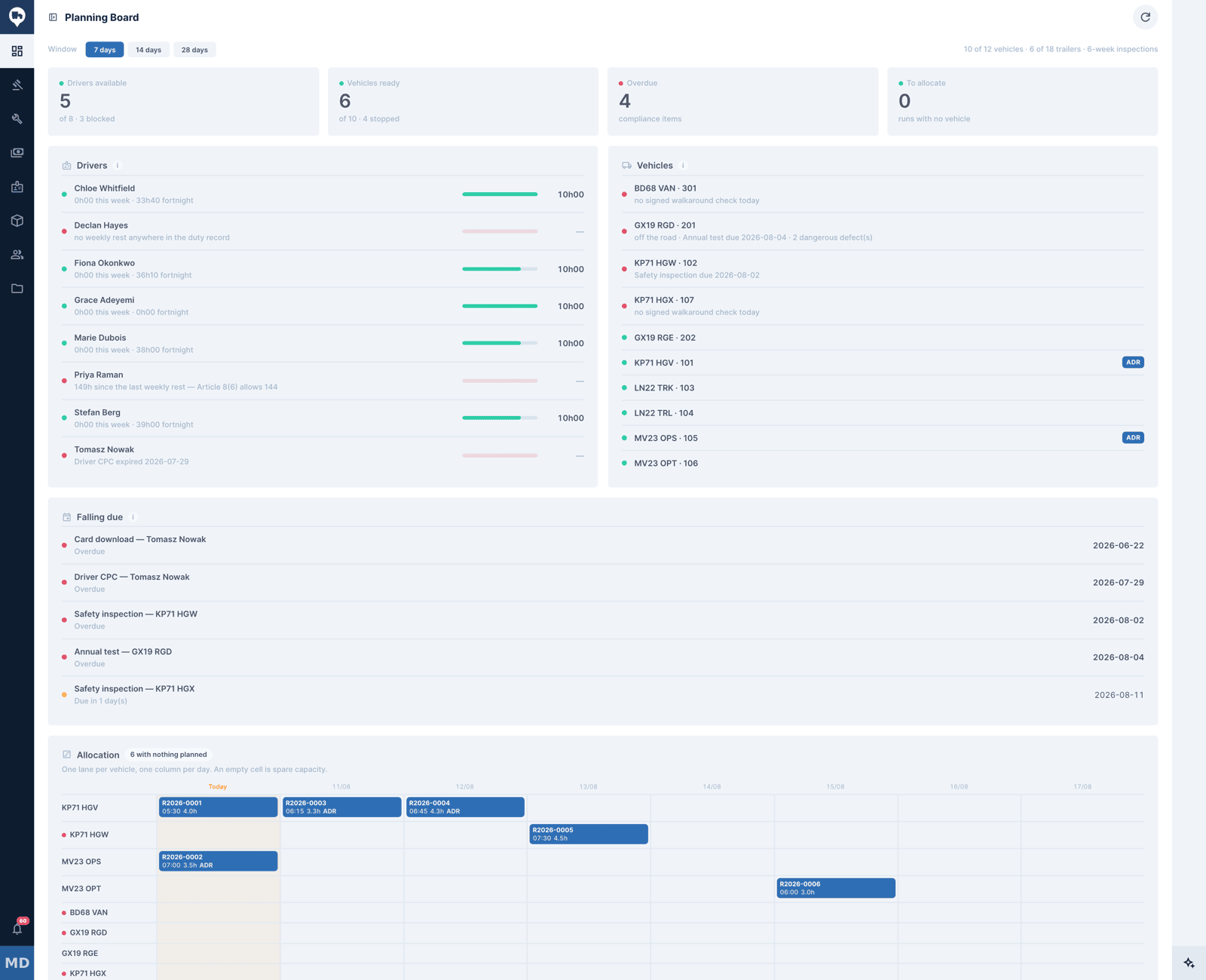
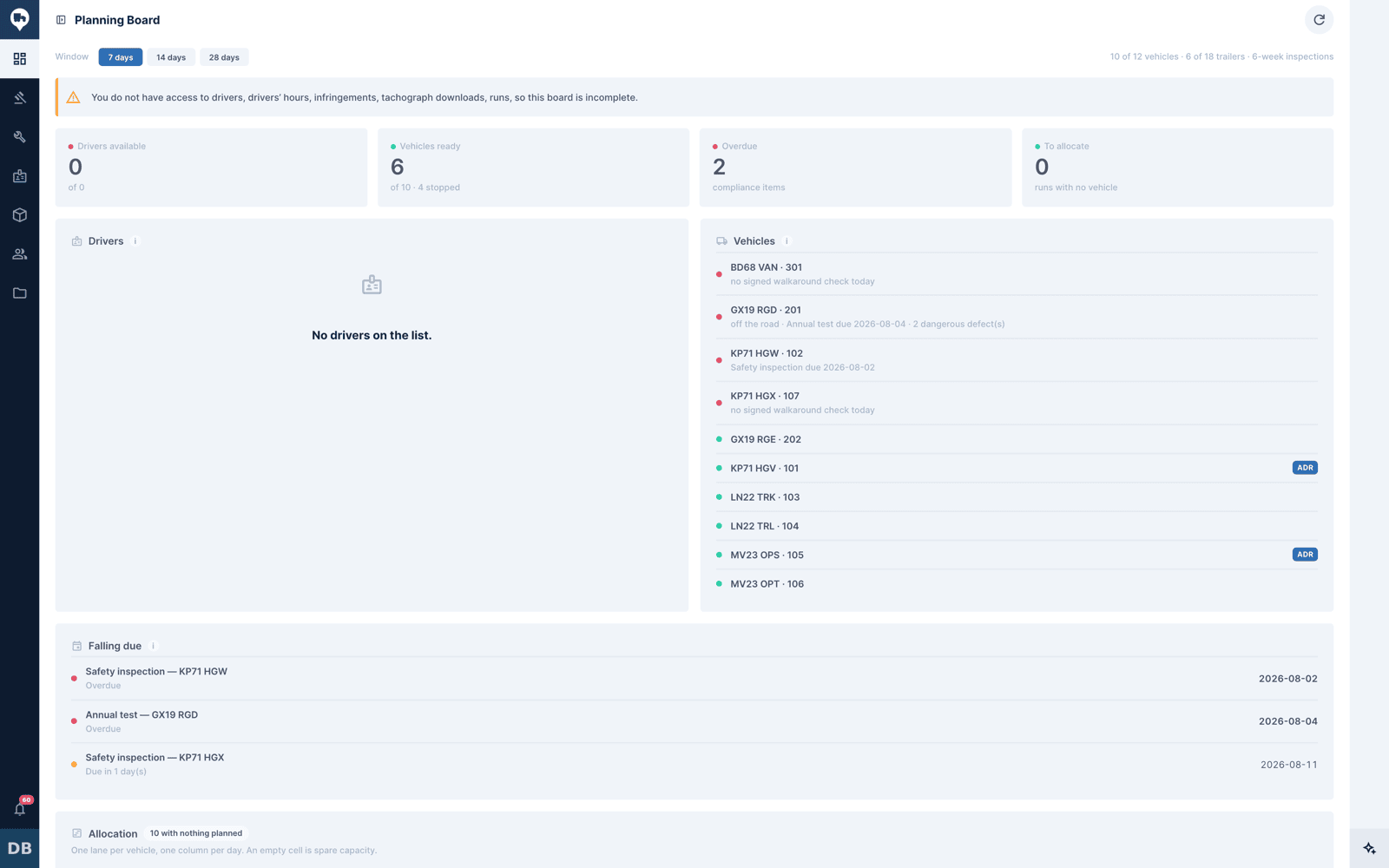
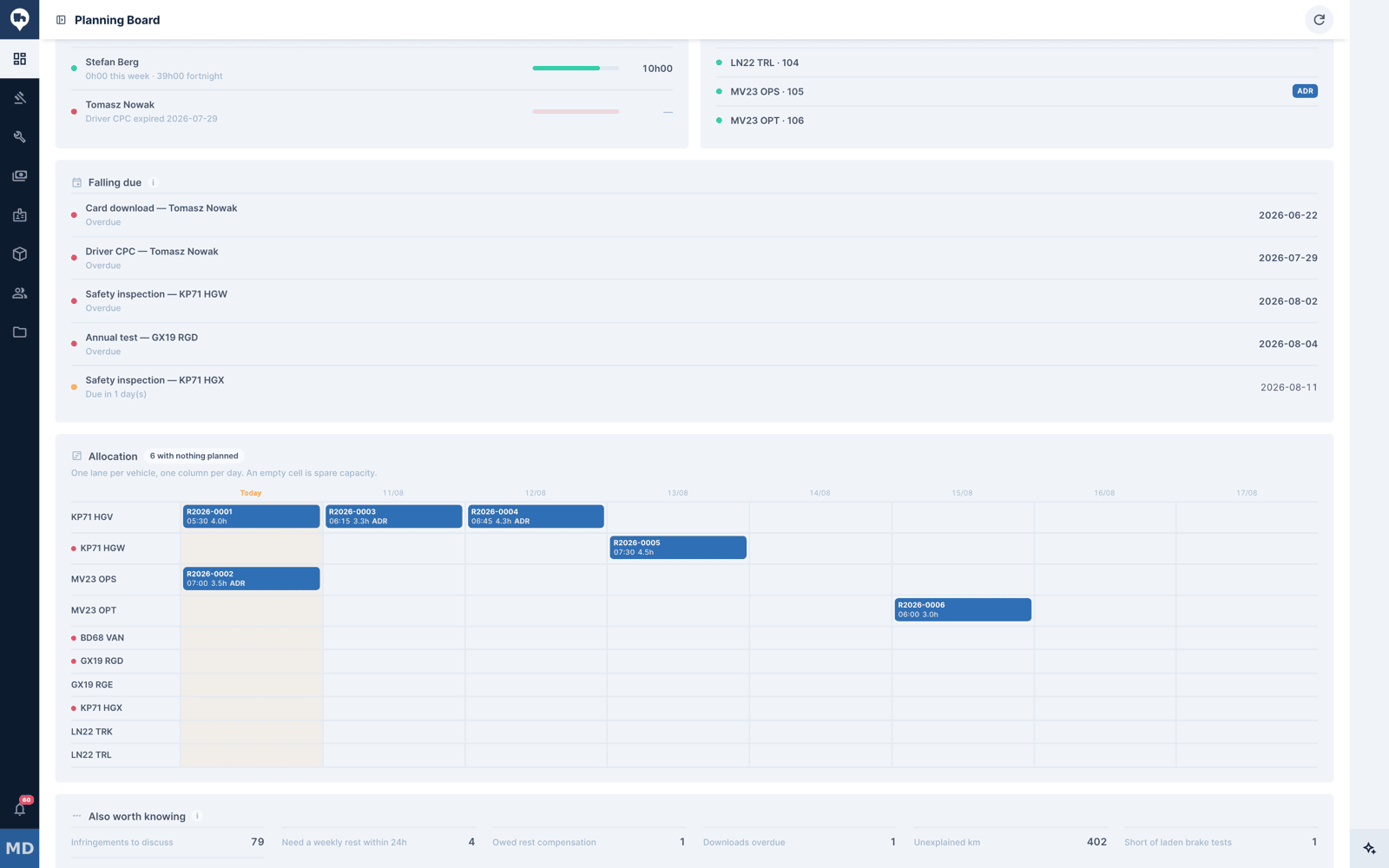
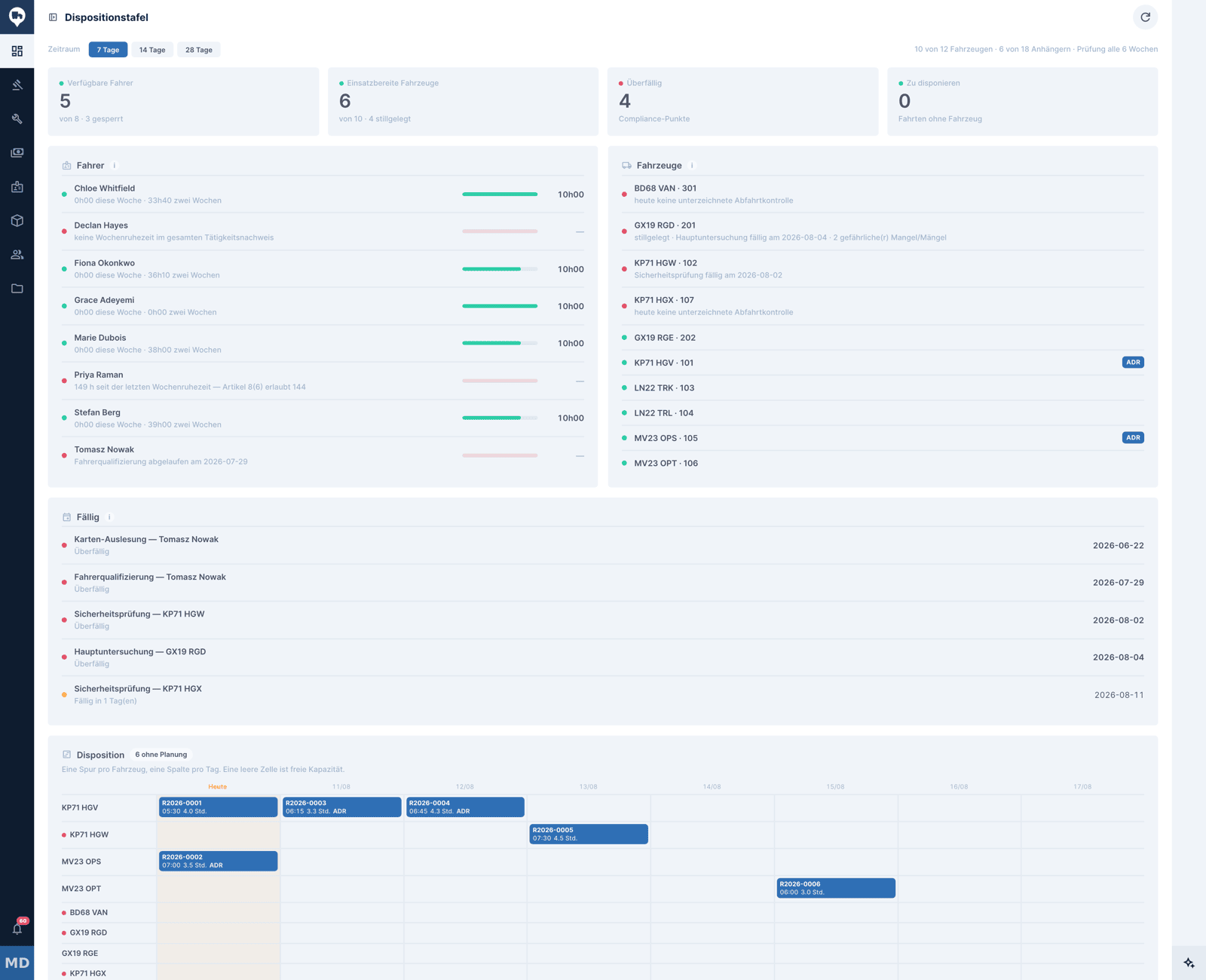
- One thing is on the roadmap rather than on the screen: the planning board reports driver headroom and vehicle dispatchability side by side, and the per-run "this allocation would fail" flag — already written and tested underneath — is not yet surfaced on the board itself.
- Directus itself ships under the Business Source License. That is free for most commercial use but has conditions — we would rather raise that now than have you discover it later.